
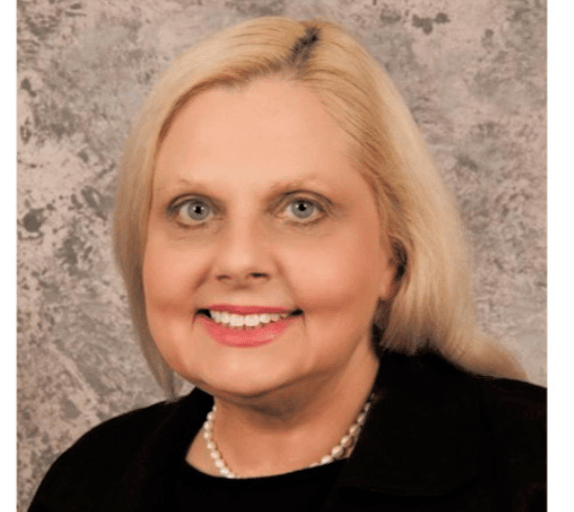
THERESE GEORGIANA BRENDLER April 6, 1953 ~ October 16, 2018
Therese G. Brendler was born April 6, 1953 in Bartlesville, Oklahoma, and was the fifth of six children born to Joseph Stephen Brendler and Marian Elizabeth Hanley Brendler. Her family moved to New Jersey briefly, and then to Lake Charles, Louisiana where she graduated from St. Louis High School in 1971. At a time when most science majors were men, she majored in chemistry at the University of Texas, Austin, graduating in 1974 with Highest Honors and election to Phi Beta Kappa. She was also granted membership in Iota Sigma Pi, an honorary chemistry sorority, and Phi Lambda Upsilon, an honorary chemistry fraternity. She was awarded the Spencer T. Olin Fellowship for graduate studies at Washington University, St. Louis, MO, receiving her Ph.D. in Molecular Biology in 1982.
She then moved to Rockville, Maryland, to begin a three-year post-doctoral fellowship in the Laboratory of Molecular Hematology at the National Institutes of Health, where she conducted research on DNA transcription. During the time of her fellowship she met her husband, Dr. Edward G. Movius, through the activities of the NIH Sailing Club. She subsequently did research as a staff scientist at the National Cancer Institute, Frederick National Laboratory for Cancer Research in Frederick, Maryland until 2012, where she and her colleague, Dr. Stuart Austin, focused their studies on DNA replication in plasmids.
The P1 plasmid is a small circular DNA element that duplicates itself (replicates) once in every cell cycle of its E. coli host. Replication is inefficient in an E. coli strain which is unable to add methyl groups to its DNA. These methyl groups are added to the sequence GATC in DNA, a sequence that is found several times in the P1 origin of replication. As Therese was expert in isolating DNA binding proteins from E. coli, she set out to see if a binding protein could be found which recognized methylated but not unmethylated P1 DNA. She discovered a protein, now known as SeqA which she showed to bind specifically to GATC sequences which were methylated in one of the two DNA strands (hemimethylated). The origin of the E. coli chromosome also contains multiple GATC sites. Therese was also able to show that SeqA was able to bind to these as well as other multiple sites as long as certain spacing rules which applied to the P1and host origins were present.
At that time, she and her colleagues became aware that Dr. Nancy Kleckner of Harvard University had found a strain of E. coli that was unable to make a protein which recognized the GATC sequence. Exchange of materials between the two labs quickly showed that the missing protein was SeqA, the same protein that Therese had isolated. SeqA proved to have a most interesting role in both P1 and E. coli chromosome replication control. When a round of replication occurs, the DNA is hemimethylated for some time. This causes SeqA to bind to the replication origin and prevent further initiation to occur until the cell divides and a new round of replication is appropriate. Therese went on in collaboration with Dr. Alba Guarne of McMaster University, to be the first to solve the molecular structure of the SeqA protein and to understand how it binds specifically to the hemimethylated form of multiple GATC DNA sequences in the P1 and E. coli chromosome origins. Her research was published in scientific journals and presented at American and international meetings in France, Sweden, the Czech Republic and Italy. She visited the famous French site of ancient cave paintings in conjunction with one of those trips.
She was a member of the American Association for the Advancement of Science, the American Society of Microbiology, Women in BIO, and the Association of Women in Science, serving as secretary and treasurer of the local chapter.
Since retiring from her research at the National Cancer Institute, she has devoted herself to several volunteer activities including tutoring English to a Korean student, teaching in the science lab at the National Museum of Natural History, information guide at the National Museum of American History, and teaching religious education and serving as president of her church sodality group. She applied the same degree of thoroughness to all of these new activities that she had applied to her scientific research. She prepared very detailed pictures to help the Korean student with his vocabulary. She studied the latest facts on viruses, outbreaks, dinosaurs, and Neanderthal genes so that she could explain material clearly to the students who visited the museum. Her cousin commented that she was very good at giving simplified explanations of complicated principles of science. This ability to organize and clearly present detailed facts was appreciated by the seventh graders in her religious education classes. She devised special Bingo type games to help them learn the new religious vocabulary words.
Therese has also enjoyed classical music and ballroom dancing. She and her husband had season tickets to the National Symphony Orchestra concerts and took lessons at the Arthur Murray dance studio, gradually learning several dances steps including the waltz, fox trot, tango, salsa, rumba, and swing. She danced 30 different numbers before judges during her last dance competition.
Therese was very adventuresome. She enjoyed sailing on the Chesapeake Bay and Lake Minnetonka. She also enjoyed skiing and traveling to England, Europe, Malaysia, Mexico, and the Caribbean.
Therese's greatest joy, however, was being a mother and participating in the nurturing and growth of her daughter, Christine. She eagerly attended every dance and theater performance as well as every soccer game of Christine during her elementary, middle school, high school and college days. She helped Christine pick out appropriate clothes for school and for Christine's numerous dance recitals beginning at age four and continuing through high school. She and her husband encouraged Christine to do well in math, science and French, and were very pleased that she was able to spend a year in Malaysia as a Fulbright fellow. Therese thoroughly enjoyed a trip to Malaysia at that time. She taught Christine by example how to balance being a mother with having a full-time career, and the importance of continuing one's education and outside interests after graduation. She shared her love for animals by sending Christine frequent clips from the Eagle Cam at the National Arboretum. More recently, she was particularly excited about Christine's engagement and wedding to Evan Sanderson.
Therese was always warm and friendly when meeting new people. She had many very close friends here in the church through her association with the sodality, the choir, the Eucharistic ministers and the religious education department. She also had close friendships with the several of the members of the Bethesda chapter of the American Women in Science. One friend commented that Therese taught her what it means to give oneself to the greater community of mankind.
She is sorely missed by all who had the pleasure of knowing her.
Survivors include her loving husband of 34 years Edward Gale Movius, her daughter, Christine Marian Movius, and her husband, Evan Jay Sanderson, her sister Ellen Brendler Kline and husband, Richard Kline, brothers Joseph Stephen Brendler, Jr, and wife, Jeanette Dooley Brendler, Michael Desmond Brendler, and Thomas Brendler. She was predeceased by her parents and sister, Mary Ann Brendler.
A Mass of Christian Burial was held at St. Elizabeth Catholic Church, Rockville, MD on Friday, October 26, 2018. She was interred at All Souls Cemetery, Germantown, MD.
Dedication
These books are dedicated to the memory of my beloved wife, Therese Geogiana Brendler, Ph. D., a loving mother, a gifted microbiologist and scientist, a dedicated science teacher and mentor to young women scientists, and a talented ballroom dancer.
